

How to Buy Monero (XMR) in 2026
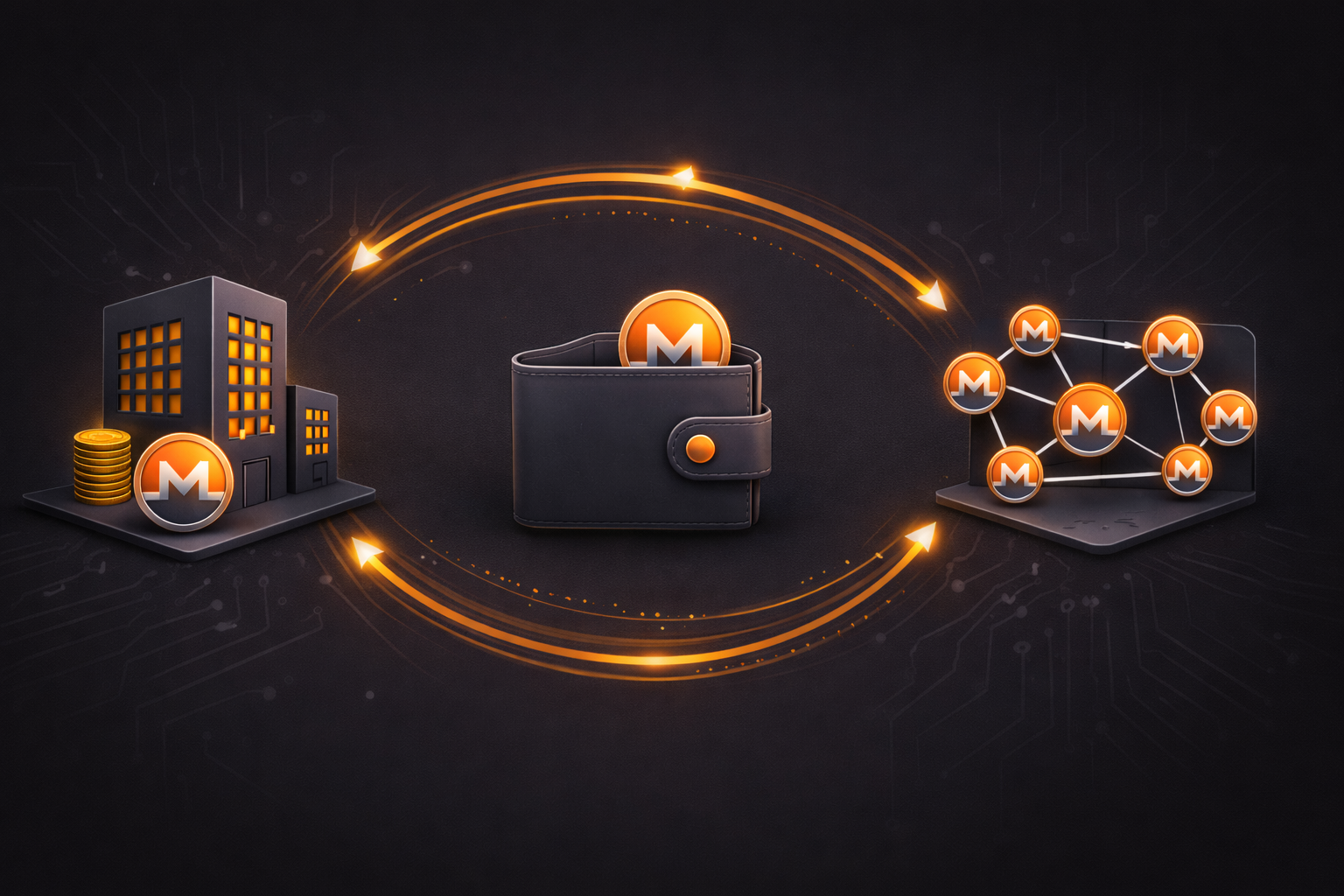
If you need Monero quickly, most people pick one of three paths: instant swap routes, peer-to-peer/DEX tools, or a centralized exchange. The right option depends on your region, urgency, and trust model. KYC risk varies, policies can change, and availability depends on region, so a small test transaction is the safest default.
Disclosure: Some links on this page are affiliate links. If you use them, monero.how may earn a commission at no extra cost to you.
Fastest working path (most people)
If you want a simple and reliable way to get Monero:
- Buy BTC on Kraken (US) or Bitfinex.
- Swap to XMR using Trocador.
- Store in Cake Wallet (mobile) or Monero GUI (desktop).
Done. You can optimize later. Start simple.
For a more complete step-by-step playbook (including regional scenarios and common mistakes), see the Monero Survival Guide.
Table of contents
Quick Selector
Quick Comparison Table
If you want speed, start with Trocador. If you want maximum control, choose Haveno. If you need fiat access, use Kraken or Bitfinex where available.
| Route | Speed | Complexity | KYC likelihood | Common risks | Best for |
|---|---|---|---|---|---|
| Instant / Aggregator | Fast | Low | Variable | Route risk, spread variability, occasional verification hold | Quick conversions into XMR |
| P2P / DEX | Medium to slow | Medium to high | Lower platform KYC, but payment methods may identify you | Counterparty quality, liquidity gaps, setup mistakes | Users prioritizing control and trust minimization |
| CEX | Medium | Low to medium | High | Custodial freeze risk, account restrictions, withdrawal delays | Users needing fiat rails and deeper books |
Instant Swaps & Aggregators
Important: Swap providers can pause specific transactions for review. Send only amounts you can tolerate being delayed, and test first.
- For very large amounts where precise execution and route control matter.
- If you cannot tolerate delays from compliance or operational checks.
- If you do not understand how refund handling works for failed routes.
Trocador.app
Best for: Comparing multiple providers before you commit.
Trocador is an aggregator that helps you compare rates and route choices across swap providers in one place.
- Pros: Route comparison, policy visibility, fast provider discovery.
- Cons: Final experience depends on selected provider.
- Account required: Usually no
- KYC likelihood: Variable by routed provider
- Custodial risk: Medium (during swap flow)
- Open source: Partially (check current components)
- Region restrictions: Provider-dependent
- Best use case: Finding the least-friction route
ChangeNOW
Best for: Straightforward account-light swaps.
ChangeNOW supports a broad list of assets and a simple send/receive flow for converting into XMR.
- Pros: Easy UI, broad asset support.
- Cons: Spread and review risk can vary.
- Account required: Usually no
- KYC likelihood: Variable and risk-based
- Custodial risk: Medium
- Open source: No
- Region restrictions: Yes, varies
- Best use case: Quick crypto-to-XMR conversion
SimpleSwap
Best for: Fast, simple swaps when you already hold crypto.
SimpleSwap offers a low-friction interface and commonly supports XMR routes.
- Pros: Simple workflow, broad token coverage.
- Cons: Verification can still be requested.
- Account required: Usually no
- KYC likelihood: Variable
- Custodial risk: Medium
- Open source: No
- Region restrictions: Yes
- Best use case: Simple one-off swaps
Vk2qn1Bhcjhh2gI4 to qualify for a $50 USDT reward if the promotion is still active.StealthEX
Best for: Quick conversions with minimal interface complexity.
StealthEX is often used for direct swap flows from one crypto asset into XMR.
- Pros: Clean flow, quick quote process.
- Cons: Final rate and checks may vary per transaction.
- Account required: Usually no
- KYC likelihood: Variable
- Custodial risk: Medium
- Open source: No
- Region restrictions: Yes
- Best use case: Fast swaps with test-first discipline
Exolix
Best for: Users comparing fixed/float route behavior.
Exolix provides fast swap paths and can be useful when rate mode matters during volatile periods.
- Pros: Straightforward quote flow.
- Cons: Policy review can still occur.
- Account required: Usually no
- KYC likelihood: Variable
- Custodial risk: Medium
- Open source: No
- Region restrictions: Yes
- Best use case: Quick conversion with rate awareness
DEX / P2P Routes
Haveno
Haveno is a peer-to-peer path focused on minimizing reliance on custodial exchanges. Liquidity can vary widely by region and payment method.
Bisq
Bisq is open-source desktop software for P2P exchange coordination. It generally avoids platform KYC, but your payment rail may still expose identity.
BasicSwap DEX
BasicSwap DEX emphasizes trust-minimized swaps and user control. It can require more setup and patience than centralized flows.
Safety checklist (P2P/DEX)
- Confirm software signatures and download sources.
- Start with the smallest practical test trade.
- Use payment methods that match your privacy expectations.
- Keep records of trade IDs and counterparties.
- Withdraw and verify in your wallet after completion.
Centralized Exchanges (CEX)
Kraken
Best for: Beginners needing reliable fiat access.
Kraken is often used for direct fiat-to-crypto access and mature trading workflows.
- Account required: Yes
- KYC likelihood: High
- Custodial risk: High while funds remain on platform
- Open source: No
- Region restrictions: Yes
- Best use case: Regulated fiat on-ramp and deeper liquidity
Bitfinex
Best for: Users who want more trading control on a centralized platform.
Bitfinex can suit users who want a centralized trading venue and broader order controls.
- Account required: Yes
- KYC likelihood: High for many functions
- Custodial risk: High while custodial
- Open source: No
- Region restrictions: Yes
- Best use case: Advanced centralized trading flow
Recommended Flows
Flow 1: Fastest practical route (swap path)
- Buy a liquid asset where available.
- Use Trocador or a direct swap provider to route into XMR.
- Withdraw immediately to your own wallet and verify receipt.
Flow 2: More control route (P2P/DEX)
- Install Haveno, Bisq, or BasicSwap from official sources.
- Select a counterparty and payment method deliberately.
- Complete trade and confirm final XMR balance in-wallet.
Flow 3: Fiat-first route (CEX)
- Open and secure a Kraken or Bitfinex account.
- Fund, buy XMR, and confirm withdrawal settings.
- Withdraw to personal wallet as soon as practical.
Want the full playbook?
If you want a clear, maintained playbook that removes guesswork, see the Monero Survival Guide.
Most people do not need the advanced path on day one. You can improve later.
Avoid Scams + Freeze Risk
Scam pressure and policy holds are common failure points. Keep your process boring and repeatable.
Do this every time
- Double-check URL and bookmark trusted domains.
- Use a small test amount before full size.
- Confirm destination address on the final send screen.
- Prefer established services over unknown “too good to be true” offers.
- Withdraw promptly to reduce custodial exposure.
After You Buy
- Mobile: Cake Wallet
- Desktop: Monero GUI
- Acquisition: Trocador or Kraken / Bitfinex depending on region
If you are in the EU, pair this buying guide with DAC8 and Monero: What EU Crypto Reporting Means in 2026 so you can separate exchange/process risks from tax reporting obligations.
- Choose a wallet for self-custody
- How long do Monero transactions take to confirm and unlock?
- Understand Monero transaction fees before sending
- Learn how to prove Monero payment
FAQ
What is the easiest way to buy Monero?
For most beginners, a swap route is often the simplest operationally, but KYC risk varies and policies can change.
Can I buy Monero with a bank card?
Sometimes, depending on provider and region. Availability depends on region and current policy.
Is there a guaranteed no-KYC method?
No. There is no guaranteed no-KYC outcome across all situations or providers.
Why can a swap be delayed?
Providers may pause transactions for risk review or operational checks.
Is P2P always private?
Not automatically. Privacy depends heavily on payment method and your operational choices.
Should I leave XMR on exchanges?
Usually not for long-term holding. Self-custody reduces third-party custodial risk.
How do I reduce mistakes?
Use trusted links, run test amounts, verify addresses, and keep records.
What if a route is unavailable in my country?
Try another route type. Availability depends on region and policies can change.
If you want a full start-to-finish checklist with regional fallback paths, use the Monero Survival Guide.
Editorial Policy + Disclosure
This guide is reviewed for clarity and practical risk communication, not hype. We avoid “best exchange” absolutes and do not publish guaranteed no-KYC claims. Service notes reflect publicly available policies at the time of writing; policies can change. Affiliate partnerships may exist, but they do not override risk disclosures.
 monero.how