

Best Ways to Buy, Sell, and Exchange Monero (XMR) in 2026
Introduction
This guide lists reputable, currently operating ways to buy, sell, and exchange Monero (XMR) in 2026. It focuses on a short shortlist that is widely discussed, used, and generally respected by Monero users. Third-party services can change policies, restrict regions, or alter identity requirements, so treat any service choice as something to re-check before you send funds.
If you are new to Monero, one default safety rule is simple: avoid leaving funds on third-party services longer than necessary. Many users acquire XMR and then withdraw to a wallet they control. For a selection of trusted wallets, see Best Monero Wallets (2026): Trusted Picks and Clear Trade-offs.
This page is informational and does not provide financial or investment advice.
Disclosure
Some links in this guide may be referral or affiliate links. If you use those links, Monero How may earn a small commission at no additional cost to you. We only include services that are currently operating and broadly used, and we try to describe trade-offs (custody, KYC likelihood, and reliability) in plain terms so you can choose what fits your situation.
Core explanation
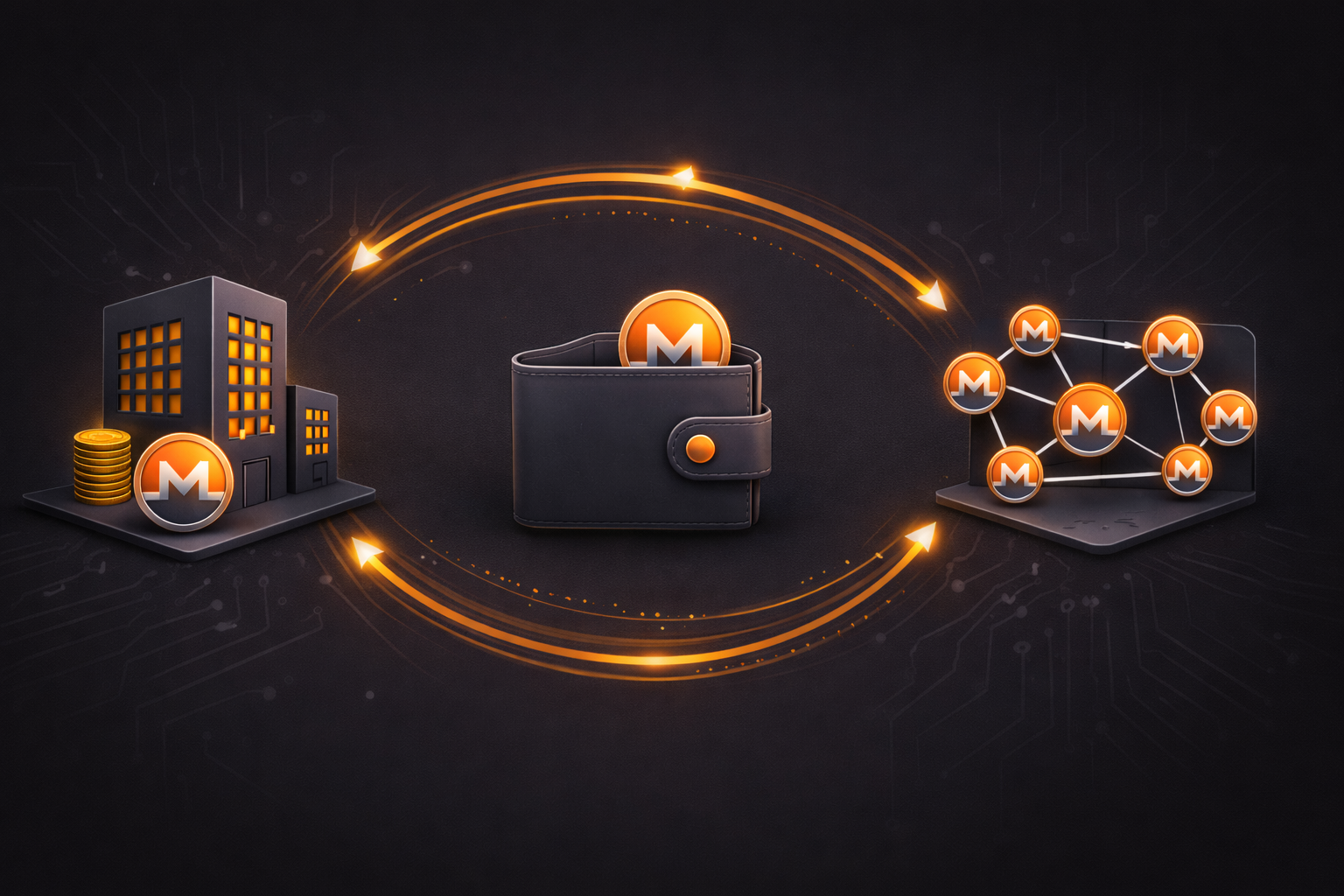
The four common paths
- Centralized Exchanges (CEXs): easiest UX and liquidity, but custodial and typically KYC.
- DEXs / P2P: non-custodial or user-run software; better privacy properties, but more operational friction and variable liquidity.
- Instant exchanges / swappers: convenient swaps between coins, often without accounts; some swaps may trigger verification depending on risk policies.
- Aggregators: compare and route swaps to third-party providers; quality depends on the chosen provider and current market conditions.
When to use which (expert default)
- Default for most beginners: a reputable CEX with a strong security track record, then withdraw to a personal wallet.
- Default for privacy-first swaps: an aggregator that helps compare providers and policies, then swap and withdraw.
- Default for trust-minimization: DEX/P2P software, accepting that liquidity and speed vary.
Trade-offs comparison (high-level)
| Option | Trust model | KYC likelihood | Liquidity | Operational complexity | Typical best use |
|---|---|---|---|---|---|
| CEX | Custodial (you trust the exchange) | High | High | Low | Fiat on/off ramps, larger orders |
| Instant swap | Provider-mediated swap flow | Low to medium (risk-based) | Medium | Low | Fast conversions between coins |
| Aggregator | Depends on provider selection | Low to medium (provider-specific) | Medium | Low | Compare routes and policies quickly |
| DEX / P2P | Non-custodial / user-run | Low | Variable | Medium to high | Minimize third-party trust |
Recommended services (2026 shortlist)
The services below are included because they are currently operating, widely known, and have a track record of real-world use. Even so, confirm availability for your region and read policies carefully before you deposit or swap.
Centralized Exchanges (CEXs)
CEXs are typically the most straightforward route for fiat purchases and larger trades, but they are custodial and generally require identity verification.
Kraken
Kraken is one of the most consistently recommended centralized exchanges for Monero, largely due to its long track record, straightforward interface, and generally reliable withdrawals. It is a custodial platform, meaning you are trusting the exchange to hold funds while you trade, so it is best used as a bridge rather than a place to store XMR long-term. For most beginners, Kraken is a practical default when a regulated fiat on-ramp and clear user experience are priorities. As with any exchange, policies can vary by jurisdiction, so it is worth confirming availability and requirements for your region before depositing.
KYC note: Kraken requires account verification. Verification involves providing identity documents and related information as part of their onboarding process.
- Best for: Beginners, fiat on-ramps, larger orders
- When not to use: If you require a no-KYC path
Bitfinex
Bitfinex is a long-running exchange with active markets and a feature set that tends to appeal to more experienced users. It is frequently mentioned as a viable option for trading XMR where available, especially for users who want more advanced exchange functionality. Like other CEXs, it is custodial while your funds are on-platform, so many Monero users treat it as a place to execute trades and then withdraw. Before using it, confirm account and withdrawal requirements for your location and intended use case.
KYC note: Bitfinex operates verification levels as part of its compliance program; access to specific features depends on your verification tier. Review the requirements for your intended use (such as deposits/withdrawals) before funding an account.
- Best for: Traders who want deeper exchange features
- When not to use: If you want a simple “swap and withdraw” flow
DEX and/or Peer-to-Peer (P2P)
These options exist to reduce reliance on centralized custody and to improve censorship resistance. The trade-off is that liquidity and speed can be less predictable, and you may need to install and run software locally.
Haveno
Haveno is a Monero-focused peer-to-peer trading approach built around user-run software rather than a centralized marketplace account model. It is commonly discussed as a P2P-style path for users who want to reduce reliance on custodial exchanges, but the experience depends heavily on local liquidity and available payment methods. In practical terms, Haveno can be a strong fit when privacy goals and minimized third-party trust matter more than instant execution. The trade-offs are that setup and trade completion may take more time, and availability can vary significantly by region.
KYC note: Haveno is designed around peer-to-peer trading via user-run software rather than a centralized account model. That generally means there is no platform-run identity verification step, but your real-world privacy can still depend on what payment method you choose and what your counterparty requires. Practical implication: prefer payment methods that do not unnecessarily reveal identity, and treat P2P liquidity as variable by region and counterparties.
- Best for: Users prioritizing minimized third-party trust
- When not to use: If you need instant execution or guaranteed liquidity
Bisq
Bisq is an open-source desktop application designed for peer-to-peer exchange without requiring a centralized exchange account. It is often referenced in privacy and censorship-resistance discussions because trading is coordinated through the software rather than a hosted platform holding user balances. In exchange for that trust model, the workflow can feel more involved, and pricing and liquidity depend on current offers rather than a deep centralized order book. Bisq can be a good option if you are comfortable running a desktop client and accepting that trades may take longer to arrange.
KYC note: Bisq does not require platform KYC to use the software. However, your payment method (such as bank transfer) can still create identity links outside of Bisq itself. Practical implication: “no platform KYC” does not automatically mean “no identity leakage” if you choose identifying payment rails. Bisq official site.
- Best for: P2P trading with strong decentralization goals
- When not to use: If you want a simple “buy in 2 minutes” flow
BasicSwap DEX
BasicSwap DEX is a cross-chain swapping tool focused on trust-minimized exchange flows, often described in the context of atomic swaps. Its main appeal is that swaps are designed to avoid handing custody to a centralized intermediary, which aligns with the “minimize trusted third parties” goal many Monero users share. In practice, usability and liquidity can be uneven across pairs, and you may need patience to find suitable counterparties or acceptable pricing. It is best suited to users who value the trust model and are comfortable with a more hands-on setup.
KYC note: BasicSwap is self-hosted software and does not operate like a custodial exchange with a centralized onboarding identity check. Privacy outcomes still depend on your operational setup, counterparties, and the chain/pair you are swapping. Practical implication: treat it as software you run and maintain (more control, more responsibility). BasicSwap DEX.
- Best for: Users who specifically want atomic swap mechanics
- When not to use: If you need consistently tight spreads and fast fills
Instant Exchanges, Swappers, and Aggregators
These services are popular for converting between cryptocurrencies quickly. Most do not require an account for basic swaps, but some transactions can trigger additional verification depending on risk controls and provider policy.
ChangeNOW
ChangeNOW is a widely used instant exchange that supports swapping between many cryptocurrencies, including XMR. It is commonly chosen for convenience because it can enable a “swap and withdraw” flow without needing a traditional exchange trading interface. Like most swap providers, execution quality depends on current liquidity and routing, so rates and total fees should be checked carefully before confirming. It can be a practical option when you already hold another cryptocurrency and want to convert into or out of XMR relatively quickly.
KYC note: ChangeNOW is account-light for typical swaps, but it applies AML/KYC checks using an automated risk system. If a transaction is flagged, the swap can be paused and you may be asked to complete identity verification before it proceeds.
Trocador.app (Aggregator)
Trocador.app is an aggregator that compares multiple swap providers and helps you choose a route based on price and policy differences. It is often mentioned by privacy-focused users because it makes it easier to compare options without committing to a single provider up front. The key trade-off is that your final experience depends on the selected underlying provider, including rate limits, processing time, and any transaction-specific compliance checks. Trocador is best used when you want to compare routes and policies first, then swap into or out of XMR and withdraw promptly.
KYC note: Trocador routes you to third-party providers, and each provider has its own verification rules. Practical implication: there is no single “Trocador KYC policy”; verification risk depends on the provider you choose and the transaction context.
SimpleSwap
SimpleSwap is a popular instant swap service that supports XMR and is commonly referenced for its straightforward interface. It is typically used when someone already holds another cryptocurrency and wants to exchange into or out of Monero without using a full trading interface. As with other swap providers, the total cost is influenced by spreads and routing conditions, so it is worth comparing the final output amount before confirming. It can be a good fit for users who want a low-friction swap flow and plan to withdraw promptly to a personal wallet.
KYC note: SimpleSwap states it may require KYC checks on any transaction at its discretion, based on its risk assessment and monitoring processes. Practical implication: even if a swap begins without verification, you should be prepared for an identity request in some cases.
StealthEX
StealthEX is an instant exchange known for a simple “choose pair, send, receive” workflow that can support XMR swaps. It is often used when the priority is speed and convenience over advanced trading features. Because swap services rely on provider-side routing and liquidity, the final rate can vary, so it is best practice to review the quoted outcome carefully and consider a small test first. StealthEX can be a reasonable option for quick conversions when you want minimal interface complexity.
KYC note: StealthEX publishes a KYC/AML framework and describes due diligence measures that can apply based on risk and compliance triggers. Practical implication: do not assume every swap will be “never-KYC”; be prepared for verification requests depending on transaction context.
Exolix
Exolix is an instant exchange service that supports swapping between cryptocurrencies, including XMR, and is often used by people who prefer a streamlined swap flow. Depending on the pair and market conditions, it may offer different rate modes, which can be helpful if you are sensitive to price movement during execution. As with any swap provider, the main trade-offs are provider risk and variable spreads, so it is worth comparing the final received amount before confirming. Exolix can be a good fit when you want a simple swap experience and plan to self-custody after completion.
KYC note: Exolix states it may request additional information when it cannot form a reasonable belief about a customer’s identity, and it may suspend or refuse to complete transactions pending verification. Practical implication: treat Exolix as “usually accountless, but verification can occur,” especially for flagged transactions.
Practical guidance (safety-first)
Monero acquisition workflows differ across services, but the safety fundamentals are consistent. If you are unsure where to start, choose a reputable service, do a small test amount first, and only then scale up.
A conservative default workflow
- Decide your trust model: CEX (custodial) vs swap (provider risk) vs DEX/P2P (more control, more setup).
- Confirm the KYC likelihood: exchanges usually require it; swappers may be risk-based; DEX/P2P tools typically do not run platform KYC, but payment methods can still reveal identity.
- Start with a small test: verify that deposits/withdrawals work as expected in your region.
- Withdraw to your own wallet when practical: select the right Monero wallet for your needs.
- Plan for confirmation time: see How long do Monero transactions take to confirm and unlock? for spendability timing.
Common mistakes to avoid
- Leaving coins on exchanges indefinitely: this adds custodial risk (service freezes, account issues, policy changes).
- Assuming “no-KYC” means “no identity leakage”: your payment method (bank transfer, card, etc.) can still reveal identity even without platform verification.
- Using obscure services because they promise convenience: reputation matters.
Fee awareness
Network fees for Monero are typically modest, but exchange/swap fees and spreads vary widely. If you want context on network fees specifically, see How much are Monero transaction fees?.
FAQs
Is it “better” to buy XMR on a CEX or swap into XMR using an instant exchange?
It depends on your constraints and your trust model. A reputable CEX can be simpler for fiat purchases and larger orders, but it is custodial and usually requires KYC, which creates an identity link at the account level. Instant exchanges and aggregators can be convenient for swapping from another cryptocurrency into XMR without maintaining an exchange account, but you are exposed to provider risk, variable spreads, and the possibility of transaction-specific verification. Practically, many users do a small test transaction first and then withdraw promptly to a personal wallet once the flow is confirmed. Common misunderstanding: “No account” does not automatically mean “no identity leakage”—your payment rails and operational choices still matter.
Do “no-KYC” swaps guarantee I will never be asked to verify identity?
No—many instant swap services operate with risk-based controls, which means certain transactions can be flagged for additional checks depending on internal policy and compliance triggers. This exists because providers attempt to reduce fraud and meet various legal obligations, even when the default flow is accountless. The practical implication is to avoid sending funds you cannot afford to have temporarily held while a provider requests additional information, and to compare policy expectations before swapping. Common misunderstanding: users often assume a label (“no-KYC”) is a binding promise rather than a typical-case description.
Why do liquidity and spreads vary so much on DEX/P2P options?
DEX and P2P markets are driven by user-provided offers rather than centralized orderbooks backed by a single operator’s market-making infrastructure. This exists to reduce central points of failure and improve censorship resistance, but it also means price, availability, and speed depend on current participants and pairs. Practically, you should expect more variability, choose offers deliberately, and be prepared to wait or adjust pairs if there are few counterparties. Common misunderstanding: people expect DEX/P2P markets to behave like large centralized exchanges, but the design goals and liquidity dynamics are fundamentally different.
After I buy XMR, why is some balance “locked” or not immediately spendable?
Monero transactions typically need confirmations before funds are considered fully settled and spendable in subsequent transactions. This exists to protect against double spending and to ensure the network has reached consensus about the transaction’s validity. The practical implication is that you should plan for confirmation time—especially if you are paying time-sensitive invoices—and consult How long do Monero transactions take to confirm and unlock? if you need a deeper explanation. Common misunderstanding: seeing an incoming transaction notification is not the same as having fully spendable funds.
 monero.how